How It Works
What to Expect When Shipping Your Car: A Step-by-Step Timeline
A step-by-step timeline of what to expect when shipping your car, from getting a quote and scheduling pickup to the walk-around inspection, transit updates, and delivery, so there are no surprises on the day.
If you've never shipped a car before, the unknown is the stressful part. Once you can see the whole process laid out, it's straightforward. Five clear stages from the first quote to the keys back in your hand.
Here's exactly what happens, in order, and what your part is at each step.
Stage 1: The quote
It starts with a quote. To give you an accurate number, a carrier needs:
- Pickup and delivery ZIP codes, or at least the cities.
- Vehicle details. Year, make, model, and whether it runs.
- Your timeline. When you'd like it picked up.
- Service type. Open or enclosed transport.
With that, dispatch returns an all-in price. At Velocity, that's typically within the hour during business hours. Get a couple of quotes to understand the market rate, and be wary of any number that's dramatically lower than the rest. We explain why in our guide to vetting a car hauler.
Stage 2: Booking and scheduling
Once you accept the quote, you book. You'll confirm the details, provide pickup and delivery contacts, and agree on a pickup window, usually a date or a short range rather than an exact hour.
This is the point to prep the car. Our pre-shipment checklist covers it in full, but the short version is this: wash it, photograph every panel, leave a quarter tank, remove personal items, and disable alarms and toll tags.
Stage 3: Pickup and inspection
On pickup day, the driver calls ahead with an ETA and meets you at the agreed spot.
Door-to-door means the driver gets as close to your address as the truck can safely and legally reach. On a narrow street, in a tight subdivision, or under low branches, they may ask to meet at a nearby wide road or a large parking lot. That's physics and safety, not a downgrade in service.
Then comes the most important few minutes of the whole move, the walk-around inspection:
- The driver examines the car and records its condition, including existing chips, scratches, and dents, on the bill of lading (BOL), with photos.
- Walk around with them. Make sure everything is noted and the odometer is recorded.
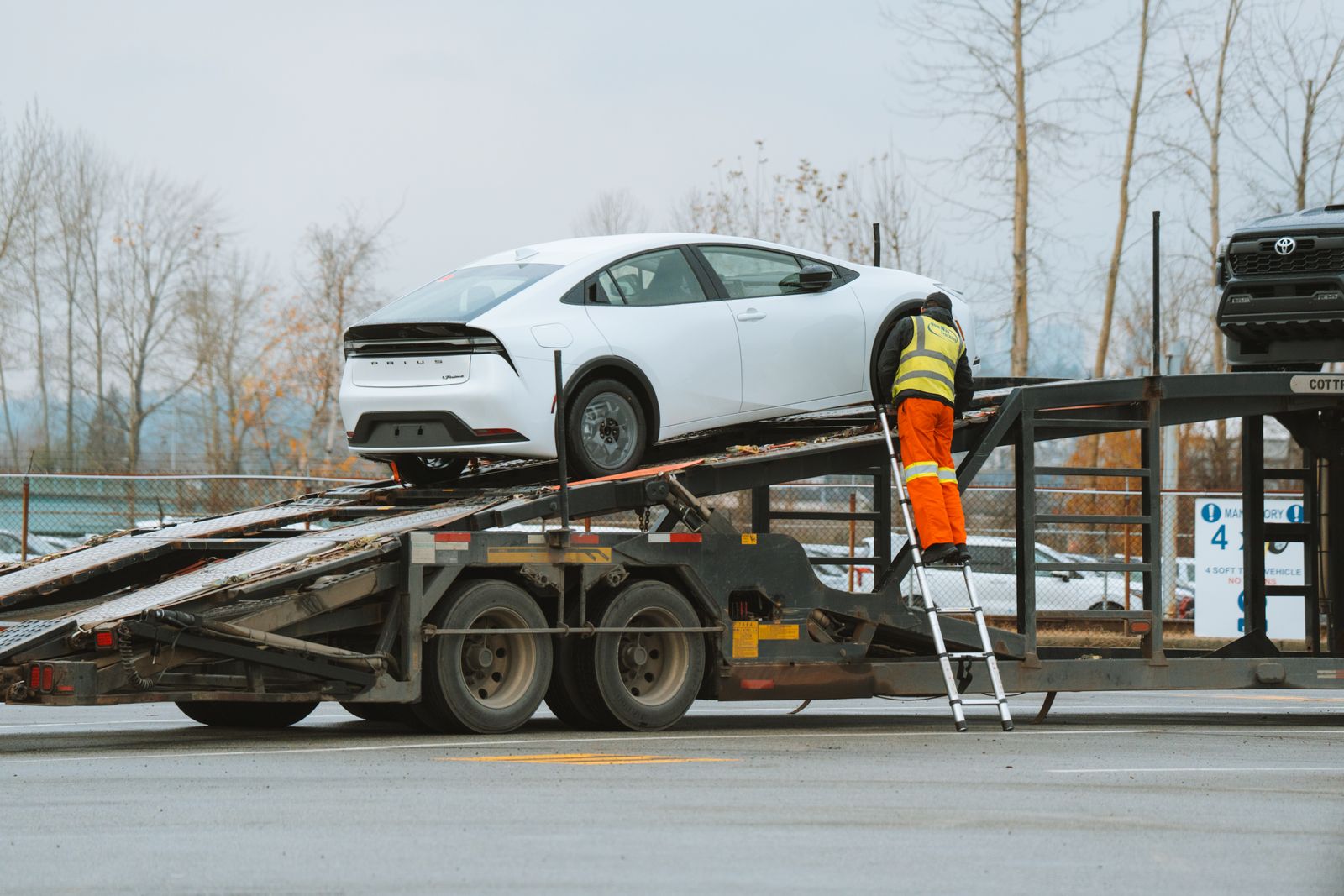
- The car is loaded and secured by the wheels with soft straps.
- You get a copy of the BOL. Never sign a blank one.
Stage 4: In transit
With the car loaded, it's on the road. What to expect while it travels:
- Proactive updates. A good carrier keeps you posted rather than making you chase them. You should be able to reach dispatch and get a straight answer on where things stand.
- Realistic transit time. As a rough guide, plan on one to two weeks for a coast-to-coast move and a few days for shorter regional lanes. Distance, weather, and season all play in.
- A single point of contact. When you book with a direct carrier, the person who quoted you and the person moving your car are on the same team. No relay through a broker.
Stage 5: Delivery
The driver calls ahead with a delivery window and meets you at the agreed location. Now you close the loop, and it's the mirror image of pickup:
- Inspect the car in good light. If it's after dark, use your phone's flashlight and take your time.
- Compare against your pickup photos and the BOL.
- If anything is new, note it on the bill of lading before you sign, and photograph it.
- Sign the BOL, settle any balance due per your agreement, and take the keys.
That signed bill of lading is what closes out the move, for you and for the carrier.

A realistic timeline, end to end
Every move is different, but here's the typical shape:
- Quote: minutes to an hour.
- Booking to pickup: often one to three days, depending on the lane and your flexibility.
- Transit: a few days regionally, roughly one to two weeks coast to coast.
- Delivery: a scheduled window with a call-ahead ETA.
If your timing is tight, ask about expedited or dedicated options up front. They exist precisely for deadline-driven moves.
The bottom line
Shipping a car is really just five steps. Get a quote, book it, hand it over with a documented inspection, track it in transit, and inspect it again at delivery. Know the stages and the whole thing goes from intimidating to routine. When you're ready, request a quote and we'll walk you through your specific move.
Frequently asked questions
How long does it take to ship a car across the country?
As a rough guide, plan on about one to two weeks for a coast-to-coast move once the car is picked up, and a few days for shorter regional lanes. Actual transit time depends on distance, route, weather, and season. A dedicated or expedited option can shorten it when timing is tight.
Does the truck come to my house?
Yes. Door-to-door service means the driver brings the vehicle as close to your address as the truck can safely and legally get. On narrow streets, in tight subdivisions, or where there are low branches or weight limits, the driver may ask to meet at a nearby wide street or a large parking lot. It's about physics and safety, not convenience.
What happens at pickup and delivery?
At pickup, the driver does a walk-around inspection, records the vehicle's condition with photos on the bill of lading, loads and secures the car, and confirms delivery details. At delivery, you inspect the car against the pickup record in good light, note anything new before signing, and take the keys. The signed bill of lading closes out the move.
Do I need to be there for pickup and delivery?
You or an authorized person you designate, such as a friend, family member, or dealership contact, needs to be present at both ends to release the vehicle, sign the bill of lading, and inspect the car. If you can't be there, arrange a trusted stand-in ahead of time and let your carrier know.