Equipment
The Right Equipment for Car Hauling: Trailers, Straps & Standards
A plain-English guide to car hauling equipment: open vs. enclosed trailers, wedge and multi-car carriers, wheel straps vs. chains, ramps for low cars, and the gear that tells you a hauler takes securement seriously.
Ask most people what protects their car during transport and they'll say "the trailer." That's half right. The trailer matters, but so do the straps, the ramps, the winch, and the condition of all of it. This is the part of the job where a vehicle either stays perfect or gets hurt, so it's worth understanding what good equipment looks like.
You don't need to become a mechanic. Knowing the basics just helps you ask better questions and recognize a hauler who takes the work seriously.
Open vs. enclosed trailers
The first fork in the road is the trailer type.
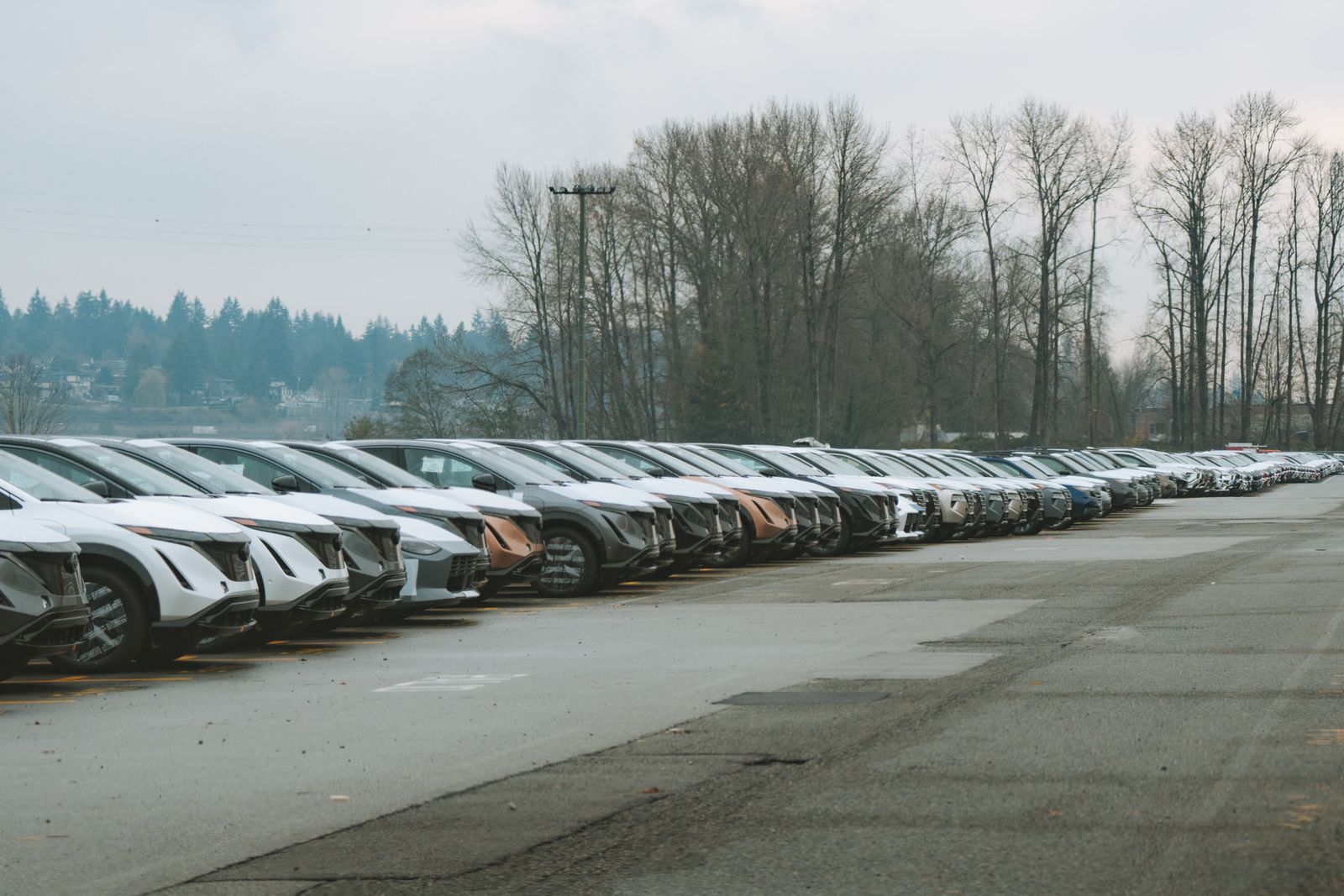
Open carriers are the workhorses of this industry. They're the multi-car rigs you see on the highway every day. Your car rides exposed to weather and road debris, the same as it would driving itself down the interstate. Open transport is efficient, widely available, and the right call for the large majority of everyday vehicles.
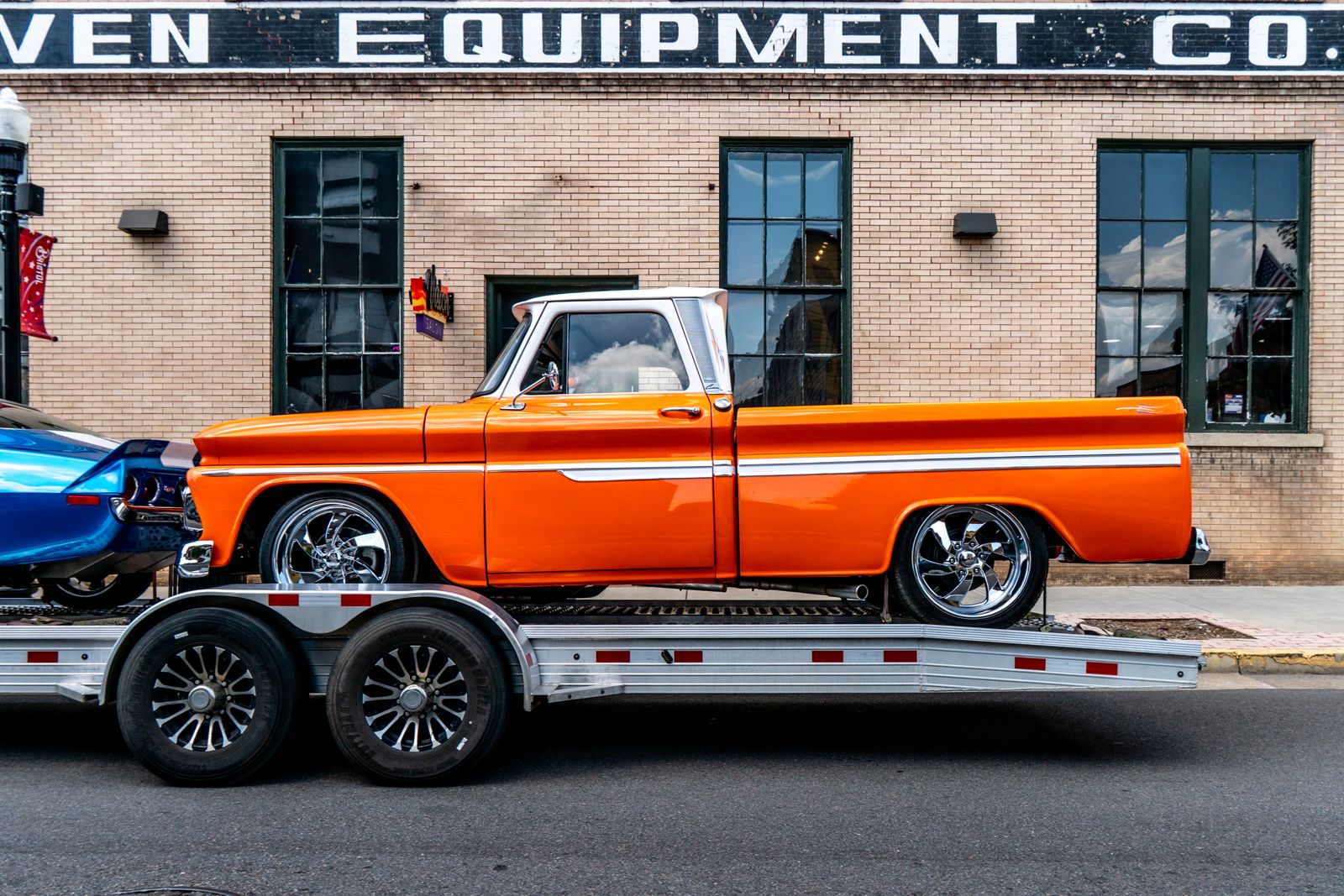
Enclosed carriers put the vehicle inside a hard-sided trailer, fully shielded from weather, dust, and debris. That's the choice for luxury, classic, exotic, and other high-value cars where the finish is part of what you're protecting.
We compare the two in depth, including cost and when each makes sense, in enclosed vs. open auto transport. For now, the equipment takeaway is that both can be done to a high standard. The securement discipline matters more than the trailer walls.
Wedge and multi-car carriers, explained
You'll hear the term wedge trailer, sometimes called a stinger. It refers to the stepped, angled deck that lets several vehicles nest closely without touching, which is where that sloped profile comes from. It's an efficient, secure setup for moving multiple cars at once, and it's what a lot of door-to-door work runs on.
Smaller 3-car and hotshot rigs, usually a heavy-duty dually pickup pulling a gooseneck or wedge trailer, are nimble enough to reach residential streets and dealership lots that a full 9-car semi can't get near. That maneuverability is a real advantage when you want true door-to-door service.
The part that really matters: securement
Most owners never think about this, and it's the thing that actually protects the car. How is it tied down?
Soft wheel straps (the modern standard)
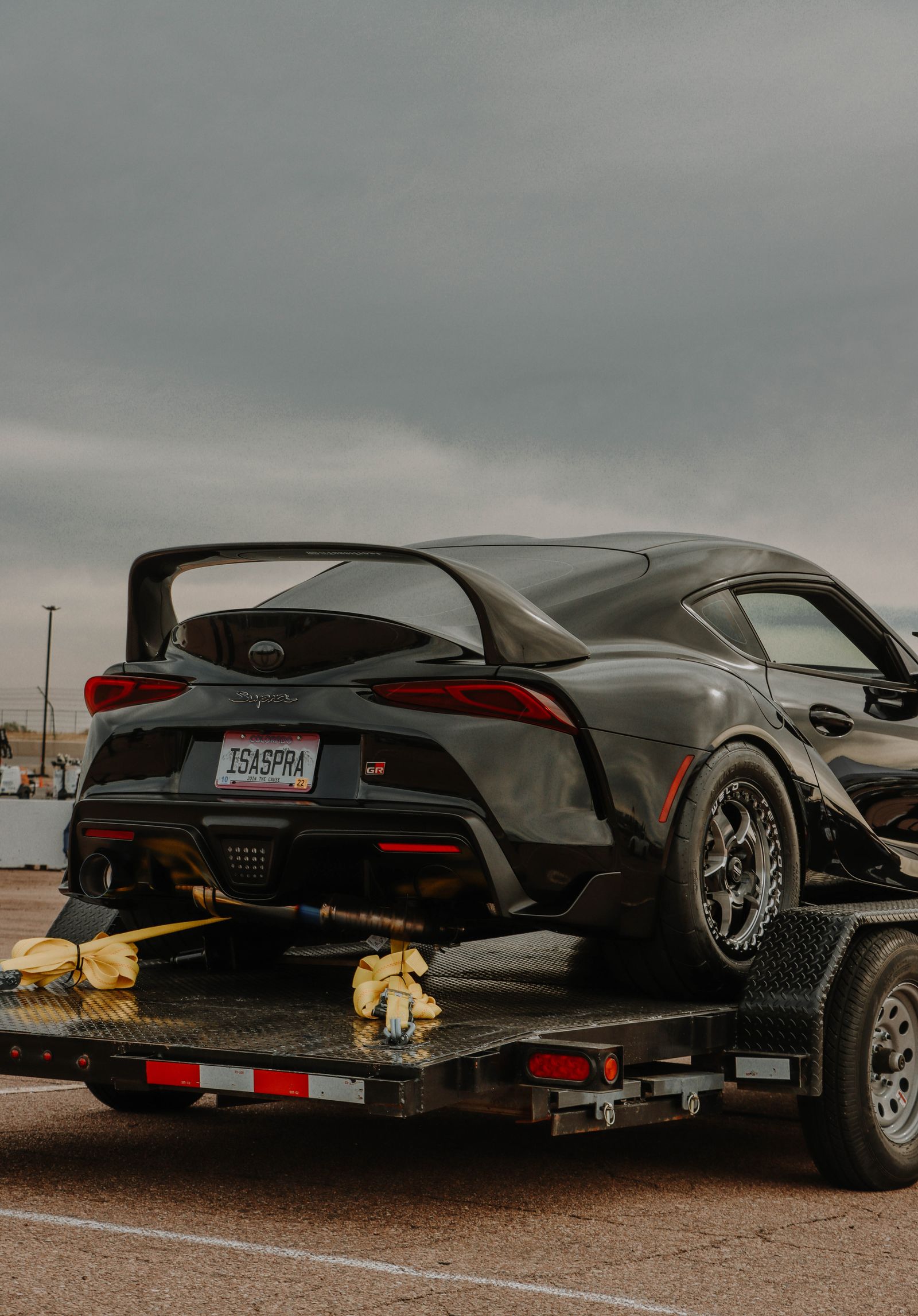
Good carriers secure vehicles by the wheels, using soft over-the-tire straps, also called basket or lasso straps, anchored at four points. The straps cradle the tires and hold the car firmly to the deck while letting the suspension move naturally over bumps.
Why that matters:
- No stress on the frame, axles, or control arms.
- No metal touching paint or bodywork.
- The car is held as a unit, the way it's designed to sit on its own wheels.
Chains (right tool, specific jobs)
Chains attached to the frame or tow points still have a place. They're the right answer for inoperable vehicles, oversized trucks, and heavy equipment. But on a running passenger car, chaining the frame or suspension is a step backward. It can stress components, and done carelessly it scratches and dents.
Ramps and lift gates for low cars
Low-clearance and exotic cars introduce one real risk during handling: scraping the front lip on load-in.
The equipment answer is long, shallow-angle ramps, sometimes supplemented with race ramps that raise the loading angle so the splitter clears. For the highest-value cars, enclosed trailers with hydraulic lift gates are the gold standard. The car is raised on a level platform instead of being driven up a ramp at all.
If your car is lowered, tell your carrier the ground clearance in advance so they show up with the right gear. That's a two-minute conversation that prevents an expensive mistake.
The unglamorous gear that still matters
Beyond the trailer and straps, a well-run rig is maintained everywhere it counts:
- Tires and brakes. A loaded carrier is heavy. Good rubber and brakes aren't optional.
- Lighting and electrical. Working trailer lights keep the load legal and visible.
- A rated winch. For safely loading inoperable vehicles without dragging them.
- Wheel chocks and quality ratchets. The small hardware that keeps everything tight over hundreds of miles.
- Weatherproofing. On enclosed rigs, clean interiors and good seals keep dust and moisture out.
None of this is flashy. All of it is the difference between a car that arrives exactly as it left and one that doesn't.
How to read the equipment when the truck arrives
You don't need a checklist in hand, but a quick look tells you a lot:
- Is the trailer in good condition, or rusted and sagging?
- Are the straps in good shape, with no heavy fraying and no knots standing in for hardware?
- Does the driver secure the car by the wheels, methodically, at four points?
- Does the loading look controlled and unhurried?
A professional's equipment looks cared for because it is. It's their livelihood. That impression at pickup is one more sign you picked the right hauler.
Bottom line
The best car hauling equipment isn't the biggest truck. It's the right trailer for your vehicle, modern wheel-strap securement, the correct ramps for your clearance, and gear that's actually maintained. Once you know what good looks like, you can spot it in thirty seconds at the curb. And if you're still deciding between service levels, our pre-shipment checklist will get you ready for the day the truck shows up.
Frequently asked questions
How are cars secured on a transport trailer?
On modern carriers, vehicles are secured by the wheels using soft over-the-tire straps (also called basket or lasso straps) anchored to the trailer at four points. This holds the car firmly while letting the suspension move naturally, which protects both the drivetrain and the finish. Chains attached to the frame are used mainly for inoperable vehicles or heavy-duty equipment.
Are wheel straps better than chains for car hauling?
For running passenger vehicles, yes. Soft wheel straps secure the car at the tires without putting stress on the axles, control arms, or frame, and they don't risk scratching paint or bending components. Chains still have their place for inoperable cars, oversized vehicles, and equipment, but for everyday and high-value cars, wheel straps are the standard of care.
What equipment is needed to load a lowered or exotic car?
Low-clearance vehicles need long, shallow-angle ramps or supplemental race ramps so the front splitter or bumper clears without scraping. Enclosed trailers with hydraulic lift gates are the gold standard for exotics because the car is raised on a level platform instead of being driven up a ramp at all.
What is a wedge trailer?
A wedge (or 'stinger') carrier is an open trailer with a stepped, angled deck that lets multiple vehicles nest closely and safely. That stepped deck is what gives these rigs their distinctive shape. It's a common, efficient setup for moving several cars at once while keeping each vehicle securely positioned.